
How to Spot a Serious French Restaurant in Phuket: Start With the Butter
Bread and butter arrives before you have ordered anything, which makes it the most honest thing on the table. Here is what to look for in Phuket, and what we serve.
In short
Bread and butter is served before you order, so it is the clearest signal a restaurant gives about its standards. Look for real French butter served tempered rather than fridge-cold, bread that arrives warm, and no charge for either. At Bisou in Cherngtalay a whole block of salted French butter from Les Frères Marchand of Nancy comes to every table with warm sourdough, a curl scooped off at the table.
Book a tableYou can read a French restaurant before you have ordered anything, and the bread and butter is where to read it. It arrives unasked, so nobody has had a chance to perform for you. Three things tell you almost everything: whether the butter is French and served tempered rather than straight from the fridge, whether the bread arrives warm, and whether either appears on the bill. Phuket has restaurants that get all three right and plenty that get none.
This is a note from our own kitchen rather than a ranking. Here is what those three signals actually mean, and what we do about them at Bisou in Cherngtalay.
Signal one: is the butter tempered, or straight from the fridge?
Cold butter is the single most common tell, and it is entirely a choice.
Butter has a serving window. Too cold and it tears warm bread instead of spreading on it. Too warm for too long and it goes greasy and flat. A kitchen that cares keeps butter tempered for service, in the narrow band where it spreads cleanly and still holds a shape. A kitchen that does not hands you a foil square at fridge temperature and lets you sort it out with a bread knife.
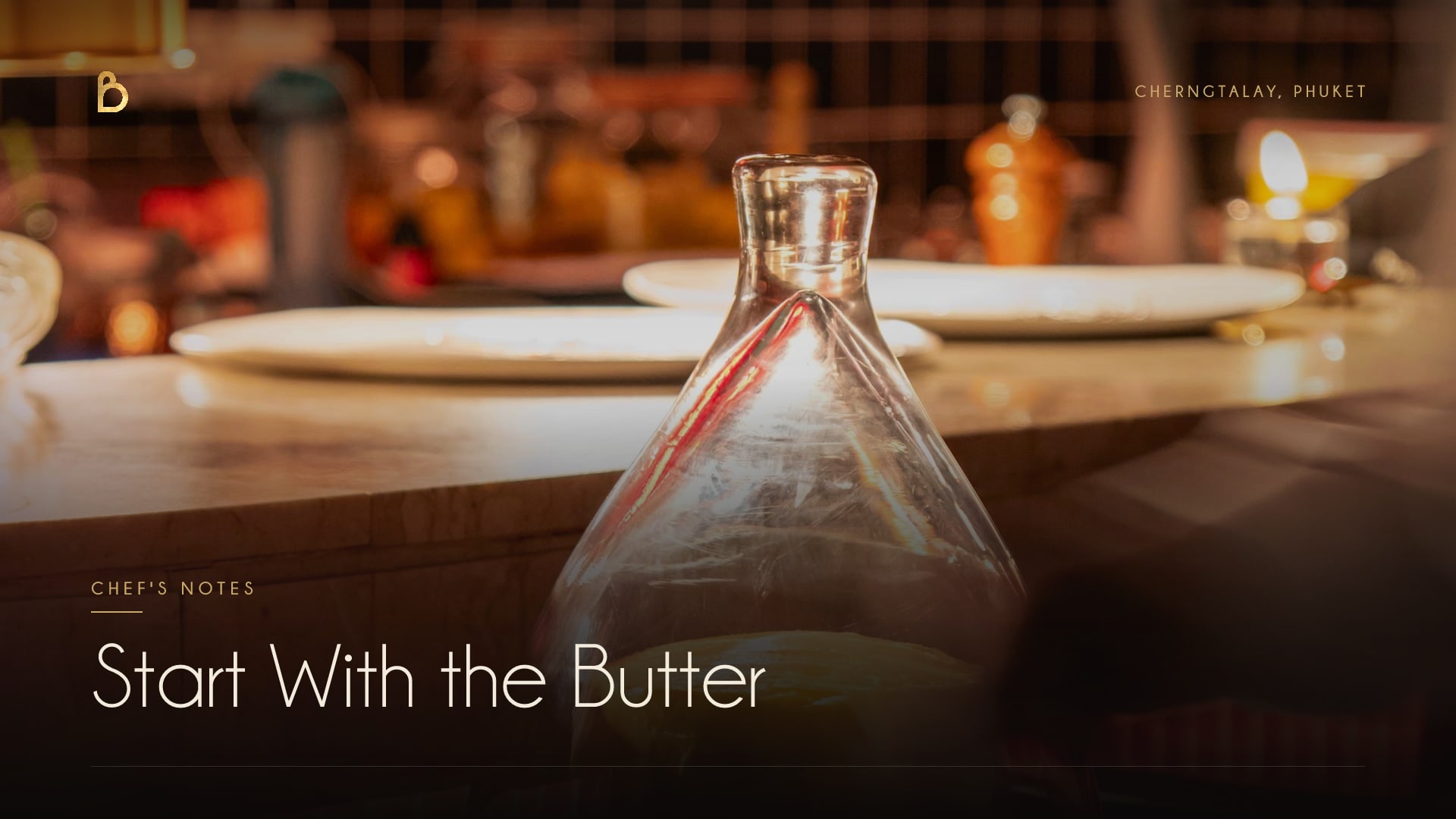
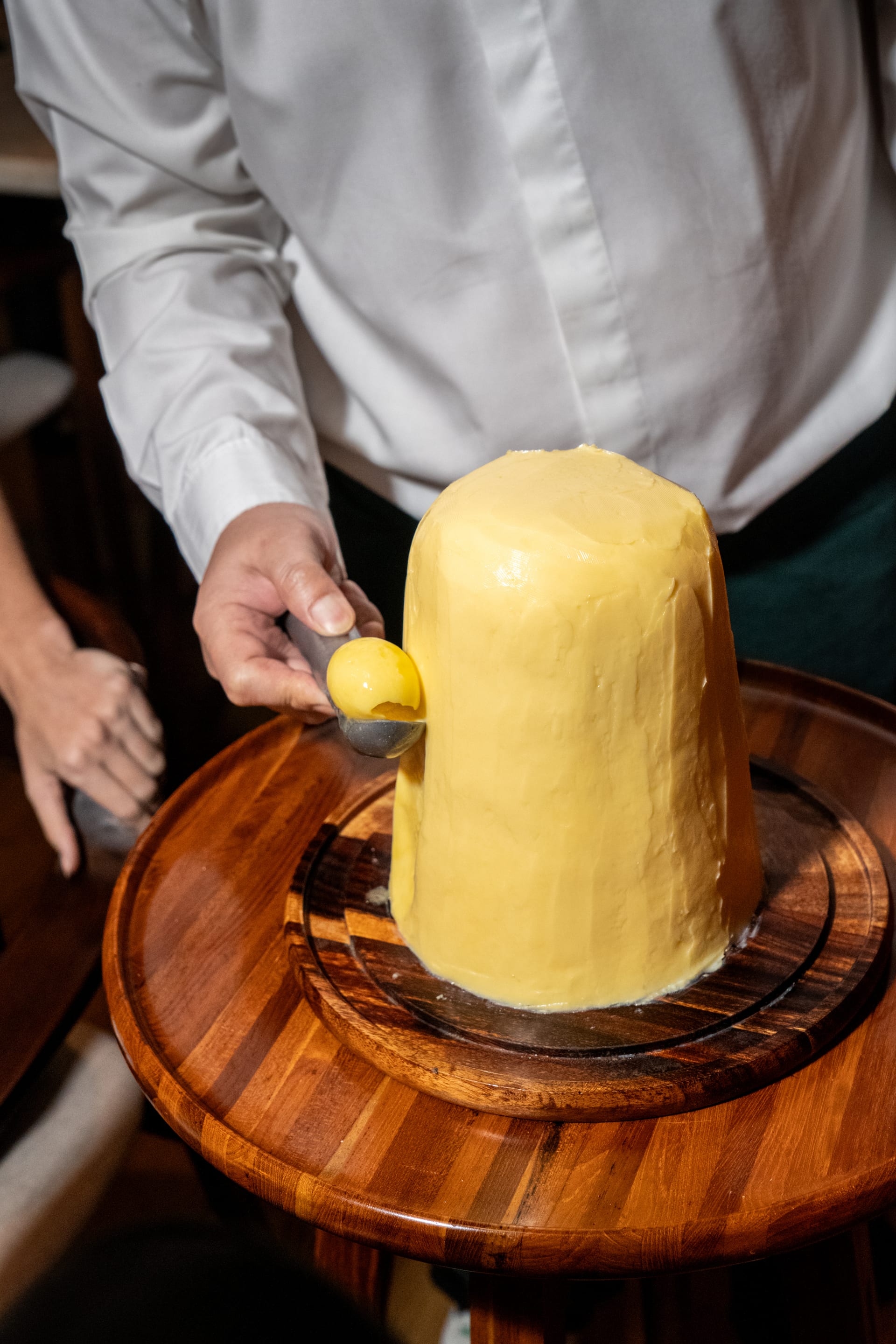
At Bisou the butter never arrives wrapped. A whole block sits under a glass cloche, tempered and ready, and a curl is scooped off in front of you with a warmed spoon. That is why it comes away as one clean shell rather than a smear. It costs a kitchen nothing but attention.
Signal two: where is the butter actually from?
Ask, because a good answer is specific and a weak one is an adjective.
"Imported" and "premium" mean nothing. A real answer names a house. Ours is Les Frères Marchand, maîtres fromagers-affineurs in Nancy, in Lorraine. The family were farmers at Clémery, in Meurthe-et-Moselle, and took a stall at Nancy's central market in 1880. According to the City of Nancy, the house ages some 450 kinds of cheese a year and works with around 200 small French and European producers.
Affineurs are not manufacturers. Their trade is choosing from small producers and then ageing each thing properly, which is a job of judgement. The butter carries their label, and their reach is what makes it possible to serve it on this island at all: the City of Nancy reports export hubs in Hong Kong, Thailand and Dubai, and the house's goods reach Thai professional kitchens through Répertoire Culinaire, a fine-food importer based in Bangkok.
Two words to be careful with when you read a menu here. Beurre de baratte is not a protected term. CNIEL, the French dairy interprofession, calls it an unofficial mention, and the DGCCRF treats it as a marketing claim. It generally means slow-churned, which is a genuine textural difference, but nothing stops anyone printing it. AOP is different: France has three protected butters, Beurre d'Isigny from Normandy among them, and that one is policed. We do not print either phrase on our butter, because our supplier does not.
Signal three: does the bread arrive warm, and is any of it charged?
Warm bread cannot be faked, and a charge for it tells you where a kitchen's priorities sit.
Bread going cold on a sideboard is a service problem, not a baking problem, and you can taste the difference immediately. We send sourdough warm, with a crust that cracks, and we send more when it goes. Long fermentation gives it the acidity that cuts through a high-fat salted butter, so each bite resets instead of building up, and the open crumb holds butter rather than letting it slide off.
Neither the bread nor the butter is on the bill. Charging for them is a legitimate business decision that plenty of good restaurants make. We would rather it be the first thing we give you.
What good sourcing looks like, and what it does not
A short list of imported things done properly beats a long one done vaguely.
Butter, cheese and caviar travel well, and they are worth the journey. Our caviar is Prunier, served at 30 grams with French toast, onion dip and crème fraîche. Beyond those, importing gets harder to justify. Seafood is better bought close to the water, and vegetables are better bought this morning, which on this island is not a hardship.
Be suspicious of a menu in Phuket that imports everything. It usually means the kitchen is buying a story rather than cooking.
Ask where the butter is from. A good answer names a house. A weak one is an adjective.
Bisou, CherngtalayWhere to eat it in Phuket
Bisou is a modern French restaurant and cocktail bar on Bandon-Cherngtalay Road, a short drive from Laguna, Boat Avenue and Bang Tao Beach, with parking at the rear via the side street.
It opened in 2025, founded by chef Antoine Darquin and sommelier Théo Lavergne, with Manon Bares running the kitchen and Louis Chartier looking after the room. Dinner runs nightly from 6:00 PM to 1:00 AM and the cocktail bar runs throughout. The food is plated to share, which is the same instinct as the butter block: one thing in the middle that everyone reaches for. The menu is here, and if you are choosing between French tables on the island we also keep a guide to French restaurants in Phuket.
The bread and butter comes out before any of it, whatever you order.
Judge us by the first thing we bring
A whole block of French butter, a curl scooped at your table, warm sourdough beside it. Every table, every night, no charge.
Book a tableFrequently asked questions
Where does the butter at Bisou Phuket come from?
The butter is French and salted, from Les Frères Marchand, a house of maîtres fromagers-affineurs based in Nancy since 1880, sold under their own label. The same house's goods reach Thai professional kitchens through Répertoire Culinaire, a fine-food importer based in Bangkok.
Is bread and butter free in restaurants in Phuket?
It varies, and it is worth checking. At Bisou in Cherngtalay a whole block of French butter and warm sourdough go to every table at no charge, whatever you order. Some restaurants charge for bread as a separate item, which is a legitimate choice but one you should be told about before it arrives.
What should I look for in a French restaurant in Phuket?
Start with the bread and butter, since it arrives before you have ordered. Butter should be French and served tempered rather than fridge-cold, bread should arrive warm, and the restaurant should be able to name the house its butter comes from rather than calling it "imported".
Is beurre de baratte a guarantee of quality?
No. It means churned butter, usually slow-churned, but it is not a protected term: CNIEL calls it an unofficial mention and the DGCCRF treats it as a marketing claim. The protected designation in France is AOP, held by three butters including Beurre d'Isigny from Normandy.
Why does sourdough suit French butter?
Long fermentation gives sourdough acidity, and acidity cuts through the fat of a rich salted butter so each bite resets rather than accumulating. The crust gives resistance and the open crumb holds the butter instead of letting it slide off.
b